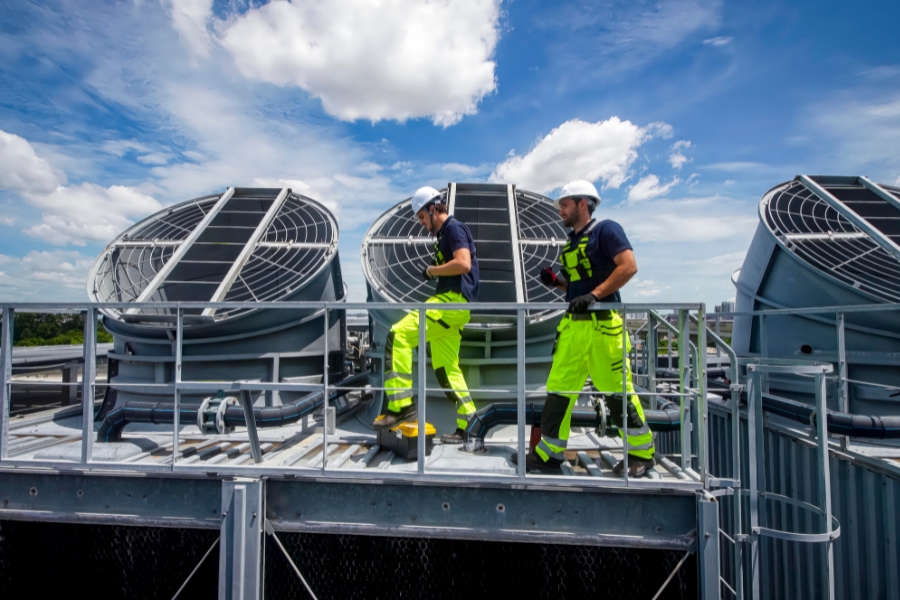
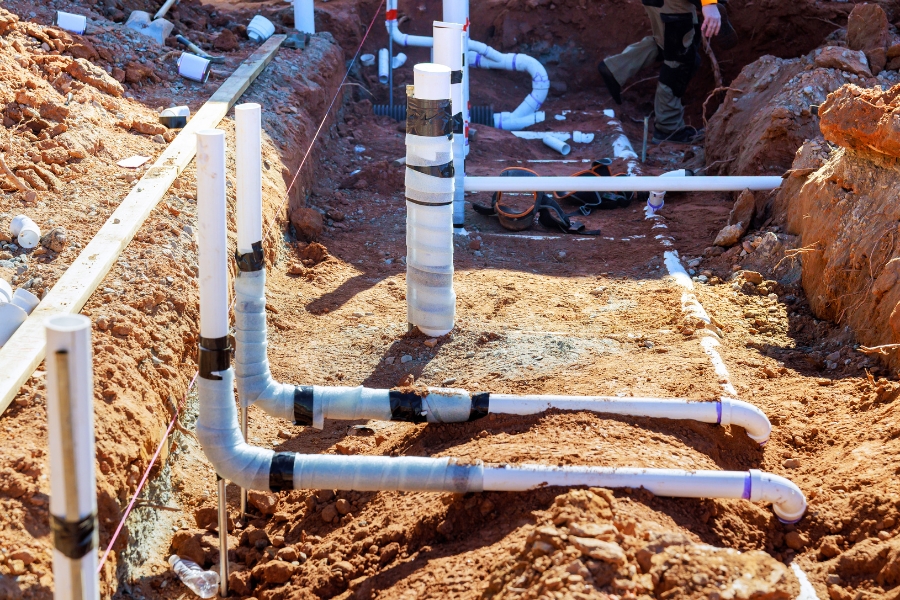
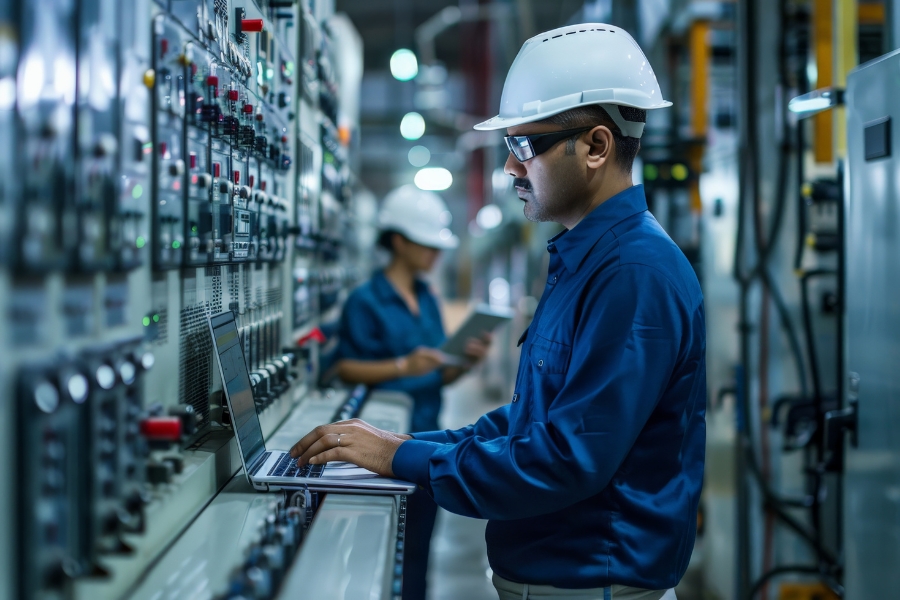
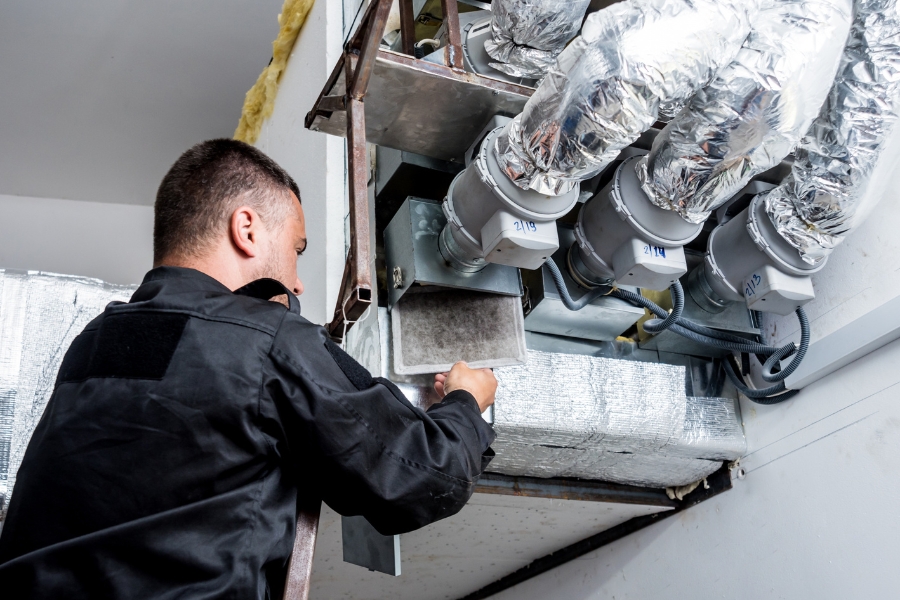
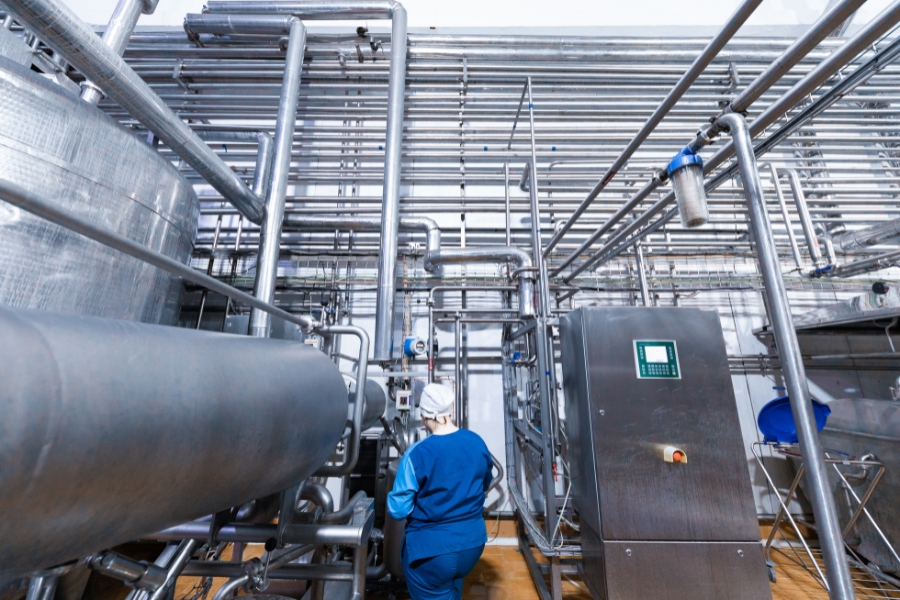
WINTRY Electromechanical LLC provides a complete range of MEP (Mechanical, Electrical, and Plumbing) services, delivering end-to-end solutions for residential, commercial, and industrial projects across the UAE. We focus on quality, efficiency, and reliability to meet the region’s demanding environmental conditions.

We specialize in the design, supply, installation, testing, and maintenance of heating, ventilation, and air conditioning systems. Our solutions are energy-efficient and tailored to ensure optimal indoor comfort and air quality in the UAE’s extreme climate.
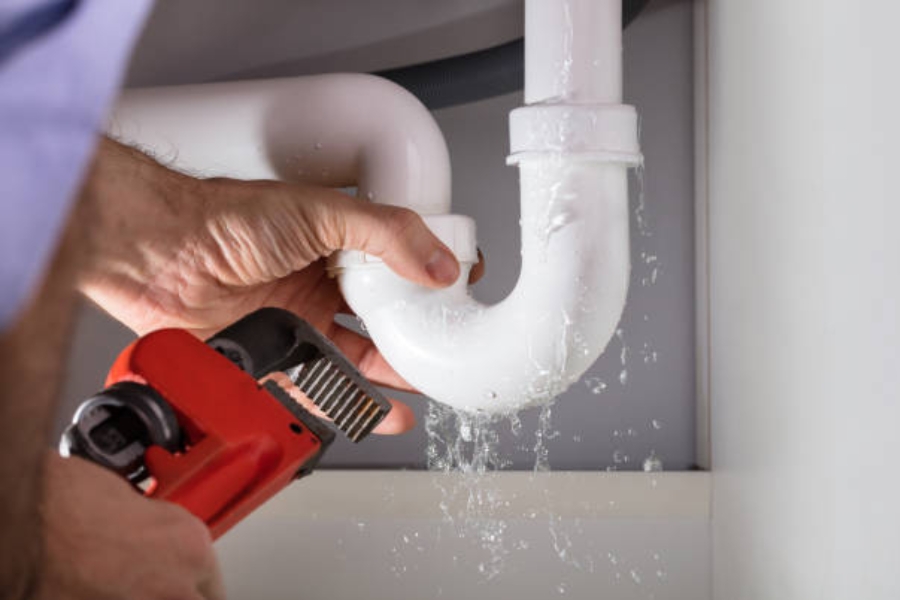
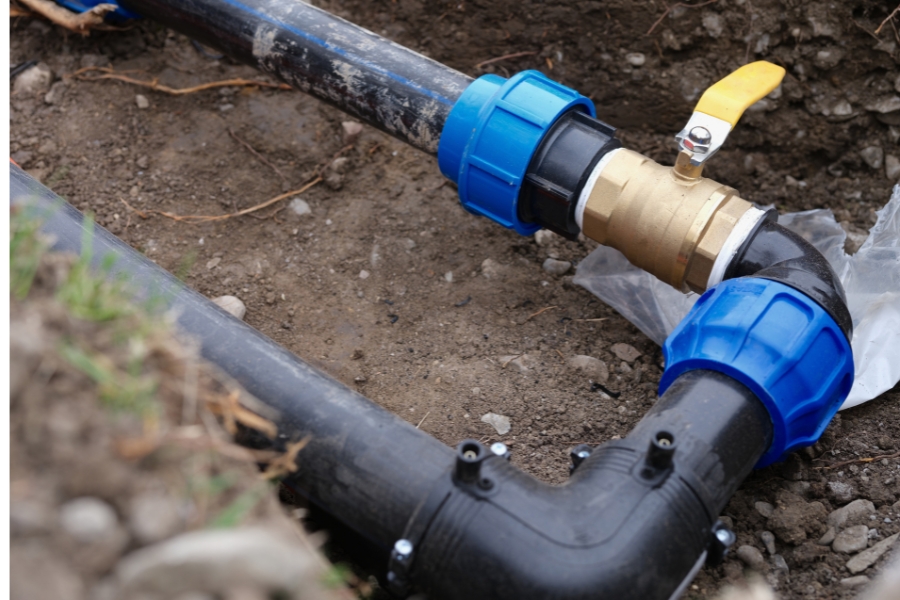
We offer complete plumbing solutions including water supply systems, drainage, piping, sanitary installations, and maintenance services. Our focus is on durability, efficiency, and compliance with local regulations.
We provide integrated MEP coordination, installation, and execution of electromechanical systems. Our team ensures smooth operation and seamless integration of all mechanical and electrical components.
We offer annual maintenance contracts (AMC), troubleshooting, repairs, and system upgrades to ensure long-term performance, reliability, and efficiency of all installed systems.
PLUMBING & SANITARY SERVICES
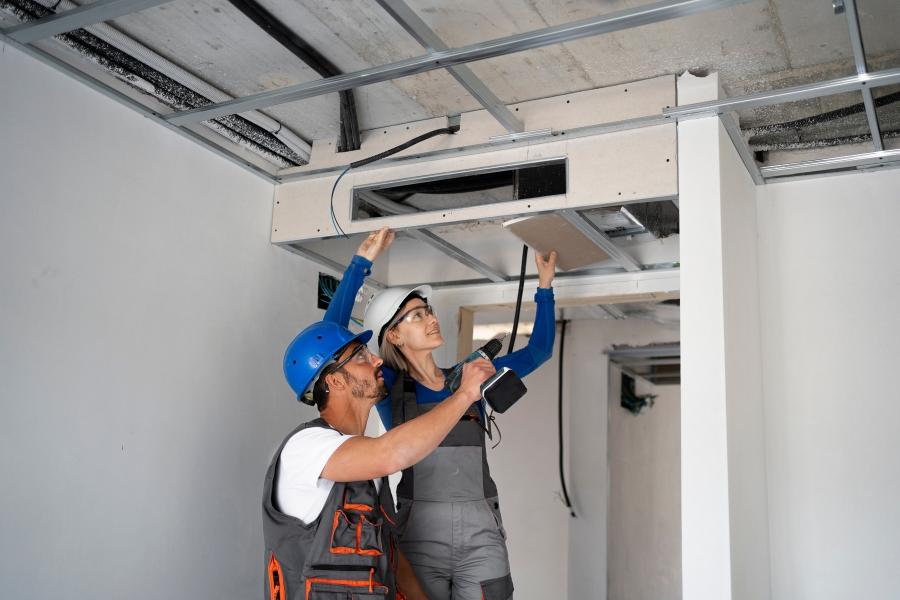
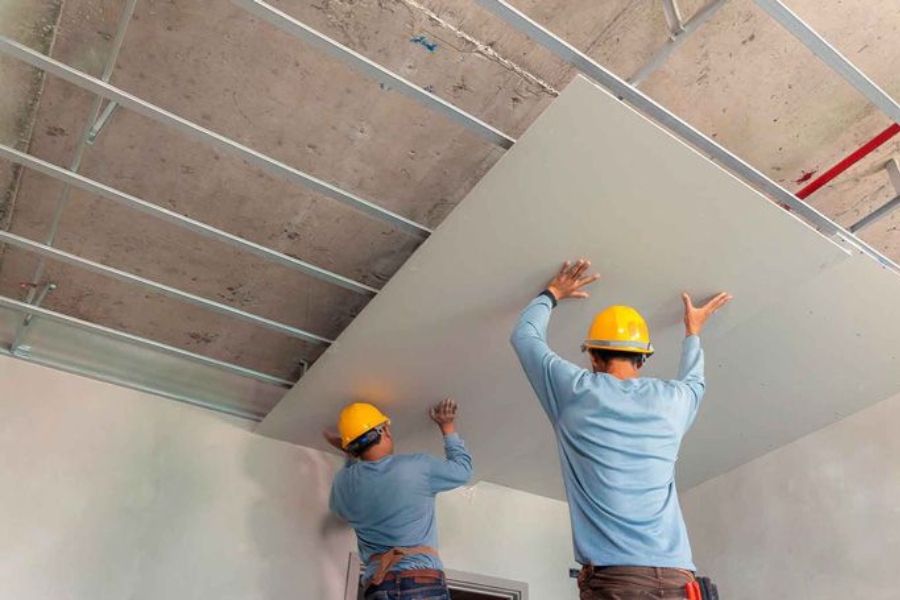
We create modern, stylish interiors with false ceiling designs and light partition installations, adding depth and dimension to any room.
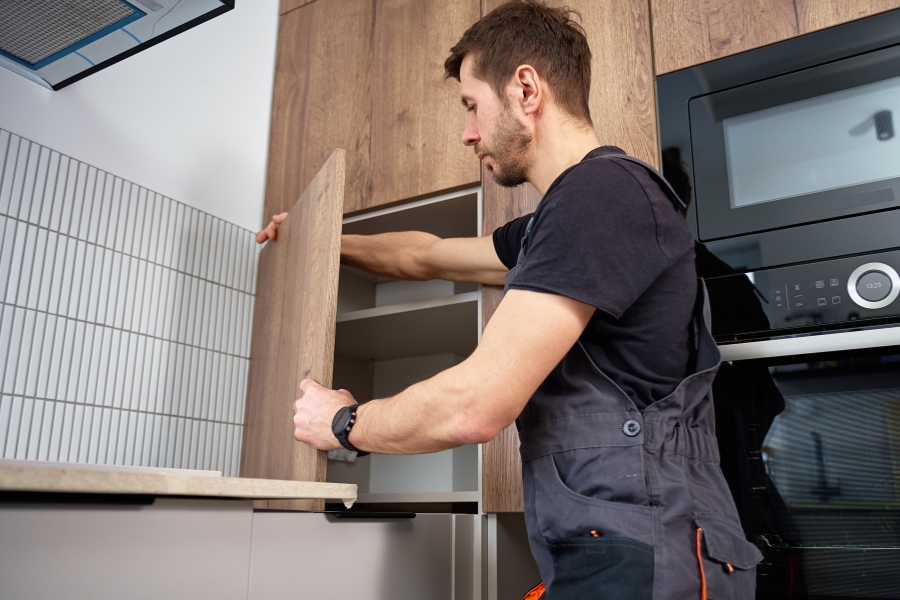
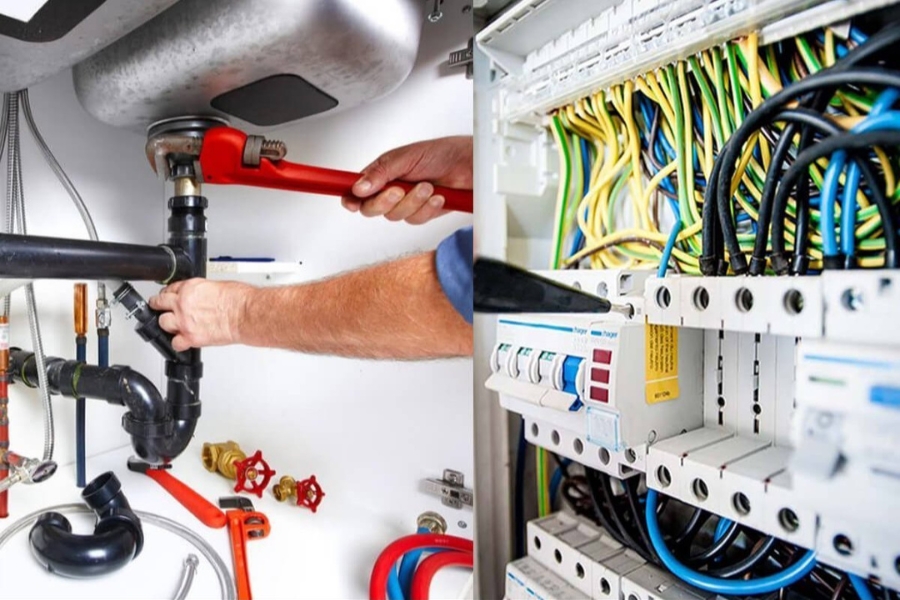
Our experienced team handles all your electrical and plumbing needs, from installations to repairs, ensuring safe and efficient systems for your property.
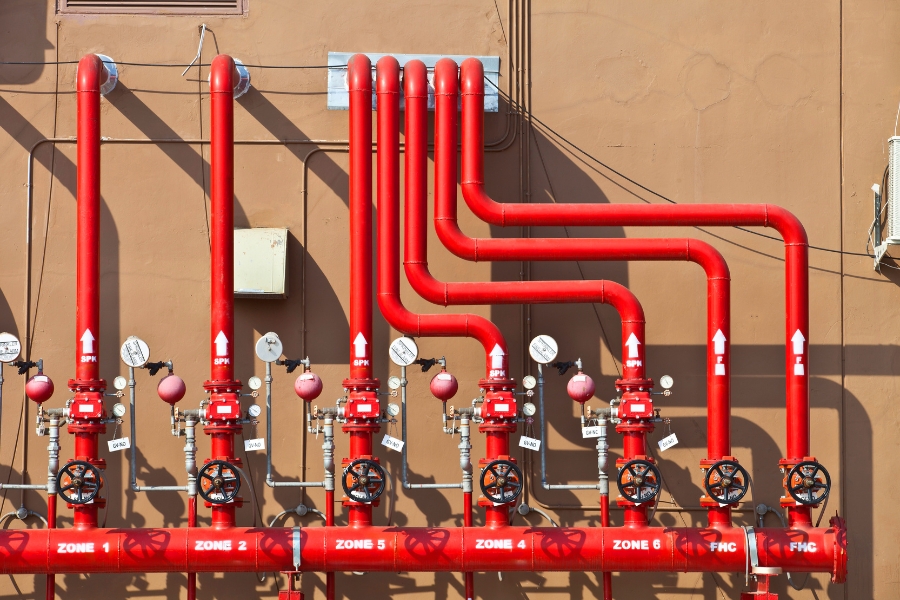
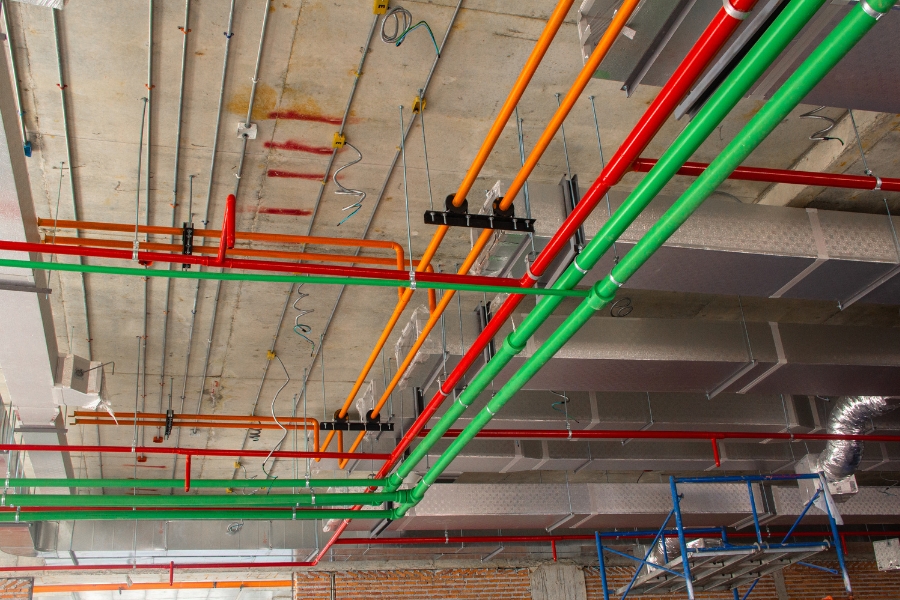
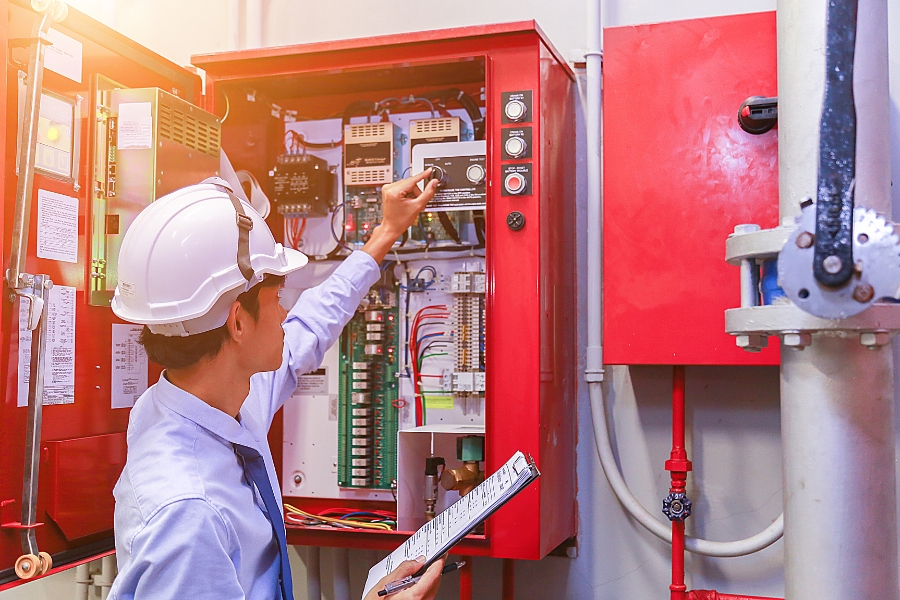
Sprinkler systems are intended to either control the fire or to suppress the fire. The fire is not extinguished before the burning materials are exhausted or manually extinguished by fire fighters. Consulting or Designing engineers select different types of installations depending on the building type and the usage of the building. Fire sprinkler systems use water to suppress, and in best case scenario to extinguish, fires in buildings. Piped systems are used to distribute the media throughout the building to wherever the fire is present. Water is relatively cheap and typically available in adequate amounts, and very useful to extinguish fire, since water-droplets rapidly absorb heat and converts it to steam, which displaces the air and suffocates the fire.
Sprinklers can be made in various designs to perform different spray patterns, time of response, pressure, droplet size etc.Fire sprinkler installations must comply with fire protection standards, which there are legislative and mandatory provisions to indicate requirements for planning, installation and maintenance of fire protection systems. Fire protection standards can be written by independent organizations, insurance associations or government authorities to minimize the possibility and effects of fires.
A fire extinguisher is an active fire protection device used to extinguish or control small fires, often in emergency situations. It is not intended for use on an out-of-control fire, such as one which has reached the ceiling, endangers the user (i.e., no escape route, smoke, explosion hazard, etc.), or otherwise requires the expertise of a fire department. Typically, a fire extinguisher consists of a hand-held cylindrical pressure vessel containing an agent which can be discharged to extinguish a fire. Fire extinguishers manufactured with non-cylindrical pressure vessels also exist, but are less common. Fire extinguishers in all buildings other than houses are generally required to be serviced and inspected by a fire protection service company at least annually.
Some jurisdictions require more frequent service for fire extinguishers. The service places a tag on the extinguisher to indicate the type of service performed (annual inspection, recharge, and new fire extinguisher). There are two main types of fire extinguishers: stored-pressure and cartridge-operated. In stored pressure units, the expellant is stored in the same chamber as the firefighting agent itself. Depending on the agent used, different propellants are used. With dry chemical extinguishers, nitrogen is typically used; water and foam extinguishers typically use air. Stored pressure fire extinguishers are the most common type. Cartridge-operated extinguishers contain the expellant gas in a separate cartridge that is punctured prior to discharge, exposing the propellant to the extinguishing agent. This type is not as common, used primarily in areas such as industrial facilities, where they receive higher-than-average use. They have the advantage of simple and prompt recharge, allowing an operator to discharge the extinguisher, recharge it, and return to the fire in a reasonable amount of time. Unlike stored pressure types, these extinguishers use compressed carbon dioxide instead of nitrogen, although nitrogen cartridges are used on low temperature (-60 rated) models. Cartridge operated extinguishers are available in dry chemical and dry powder types in the U.S. and in water, wetting agent, foam, dry chemical (classes ABC and B.C.), and dry powder (class D) types in the rest of the world. Wheeled fire extinguisher and a sign inside a parking lot Fire extinguishers are further divided into handheld and cart-mounted (also called wheeled extinguishers). Handheld extinguishers weigh from 0.5 to 14 kilograms (1.1 to 30.9 lb), and are hence, easily portable by hand. Cart-mounted units typically weigh more than 23 kilograms (51 lb). These wheeled models are most commonly found at construction sites, airport runways, heliports, as well as docks and marinas.
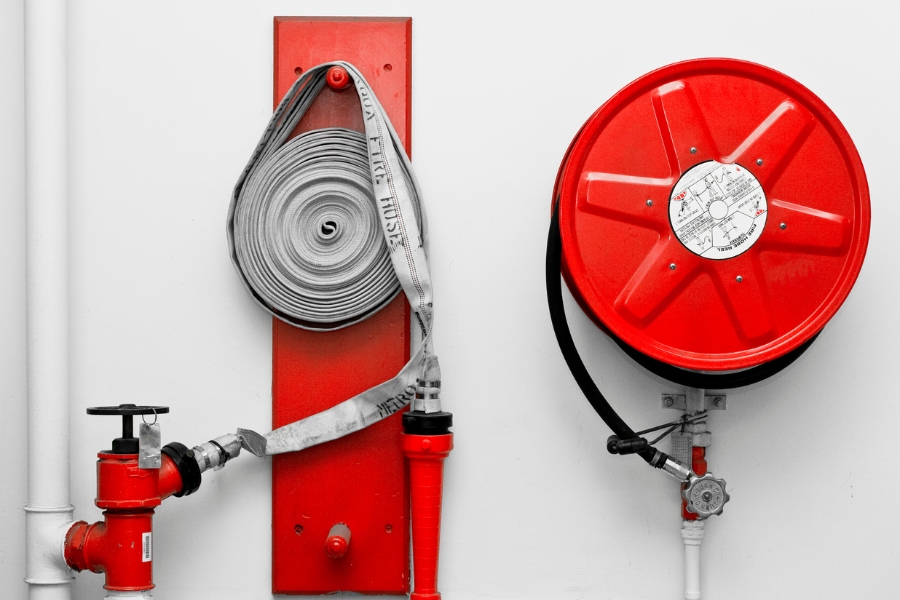
Hoses range from 1 to 4 inches in diameter. Four-inch hoses are used to connect the truck to the fire hydrant. Mid-range hoses are double-jacket hoses that have two layers of cotton over a rubber interior to carry the water. This hose is designed to expand but prevents a high leakage. Some 1-inch hoses are used in brush fires that are one-layered but are lighter. They don’t carry as much water pressure and leak more, but this is a trade-off necessary when dragging hoses up into mountains for brush fires.
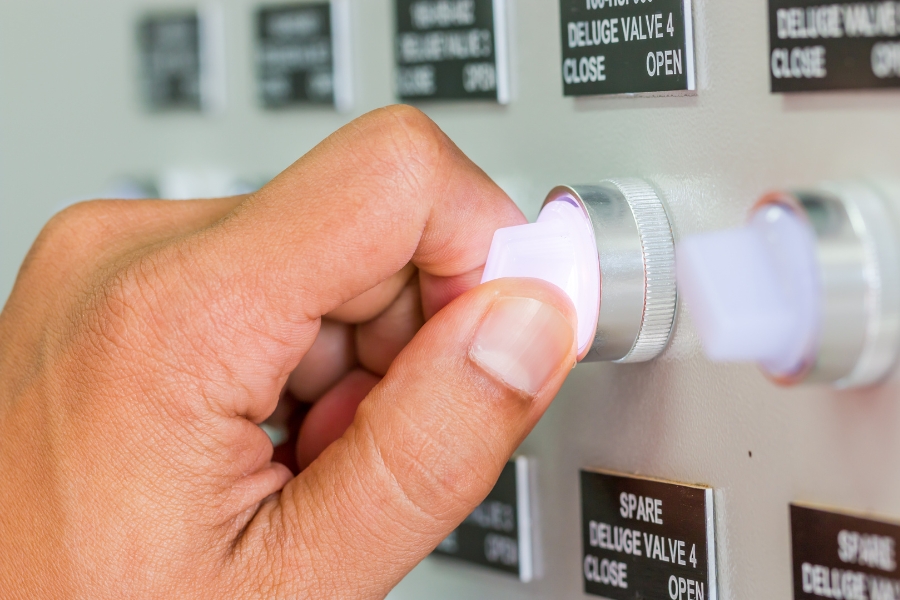
Deluge systems are systems where all sprinklers connected are open. These sprinklers have no sensing element (glass bulb). Deluge systems are used in areas where there is a concern for a rapid fire spread. The open sprinklers will distribute water over the entire area
Dry pipe systems are installed in spaces, where the ambient temperature may be cold enough to freeze the water in a wet pipe system – making a wet pipe system inoperable. Dry pipe systems are typically used in refrigerated coolers, car parking area and in unheated buildings or water sensitive areas, since dry pipe systems do not leak water.
Wet pipe sprinkler systems are the most common system. The pipes are filled with water under pressure and are only installed in frost resistant building areas. Since they are simple – they are also very reliable.
Firestops prevent unprotected horizontal and vertical penetrations in a fire-resistance-rated wall or floor assembly from creating a route by which fire and smoke can spread that would otherwise have been fire resisting construction, e.g. where a pipe passes through a firewall.
Fire stopping is also to seal around gaps between fire resisting constructions, e.g. the linear gap between a wall and the floor above, in order for construction to form a complete barrier to fire and smoke spread.
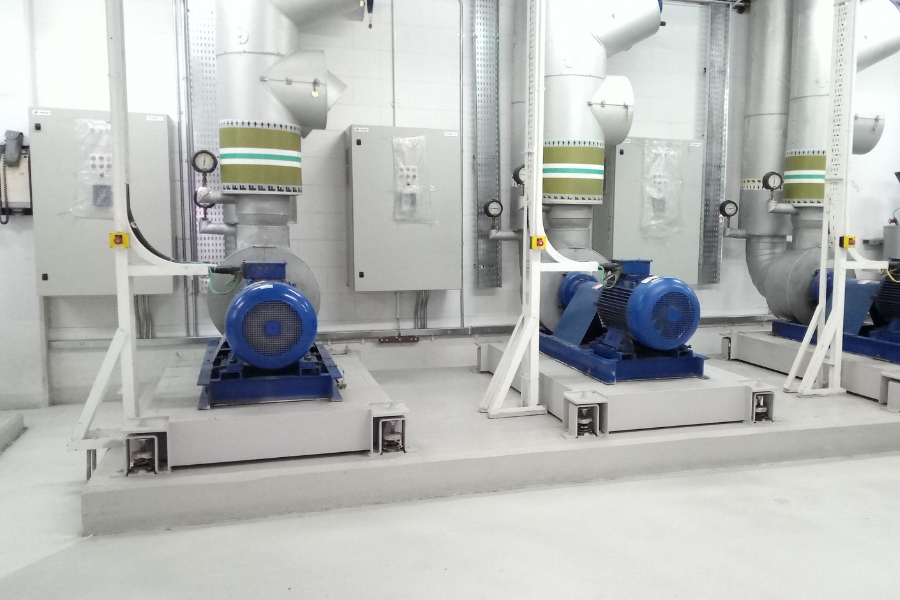
Chilled water systems are mainly used in large commercial HVAC air conditioning systems and industrial cooling applications although there are some residential and light commercial HVAC chilled water systems in use. Chilled water systems are popular because they use water as a refrigerant. Water is far less expensive than refrigerant. This makes them cost-effective, especially in commercial HVAC air conditioning applications.
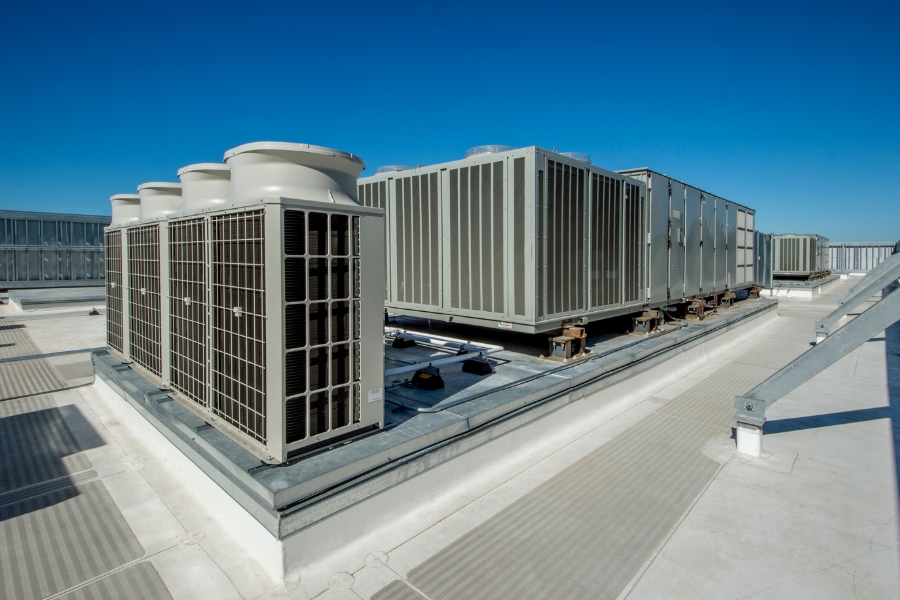
Heating, ventilation, and air conditioning (HVAC[1]) is the technology of indoor and vehicular environmental comfort. Its goal is to provide thermal comfort and acceptable indoor air quality. HVAC system design is a subdiscipline of mechanical engineering, based on the principles of thermodynamics, fluid mechanics and heat transfer. “Refrigeration” is sometimes added to the field’s abbreviation, as HVAC&R or HVACRor “ventilation” is dropped, as in HACR (as in the designation of HACR-rated circuit breakers).
HVAC is an important part of residential structures such as single family homes, apartment buildings, hotels and senior living facilities, medium to large industrial and office buildings such as skyscrapers and hospitals, vehicles such as cars, trains, airplanes, ships and submarines, and in marine environments, where safe and healthy building conditions are regulated with respect to temperature and humidity, using fresh air from outdoors.
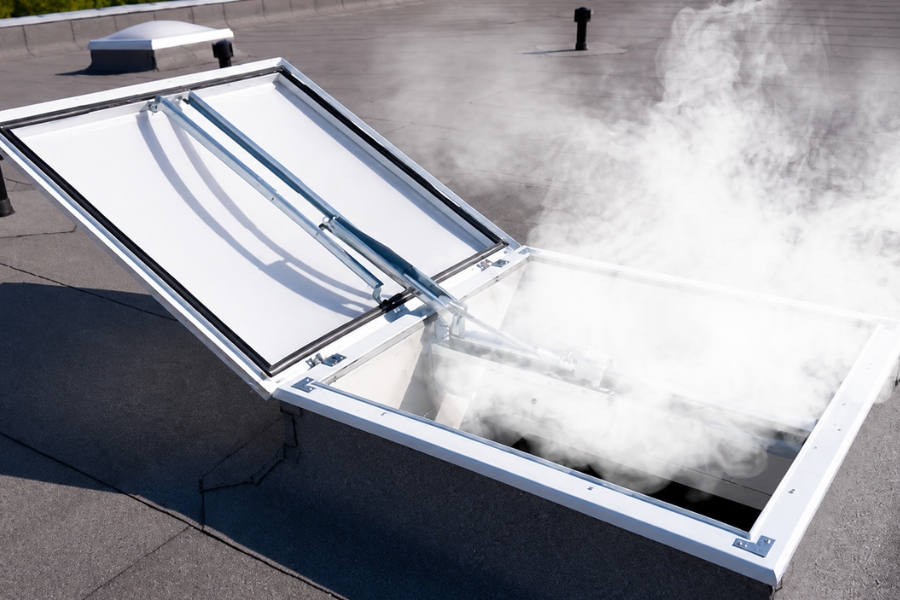
Ventilating or ventilation (the V in HVAC) is the process of exchanging or replacing air in any space to provide high indoor air quality which involves temperature control, oxygen replenishment, and removal of moisture, odors, smoke, heat, dust, airborne bacteria, carbon dioxide, and other gases. Ventilation removes unpleasant smells and excessive moisture, introduces outside air, keeps interior building air circulating, and prevents stagnation of the interior air.
Ventilation includes both the exchange of air to the outside as well as circulation of air within the building. It is one of the most important factors for maintaining acceptable indoor air quality in buildings. Methods for ventilating a building may be divided into mechanical/forced and natural types.
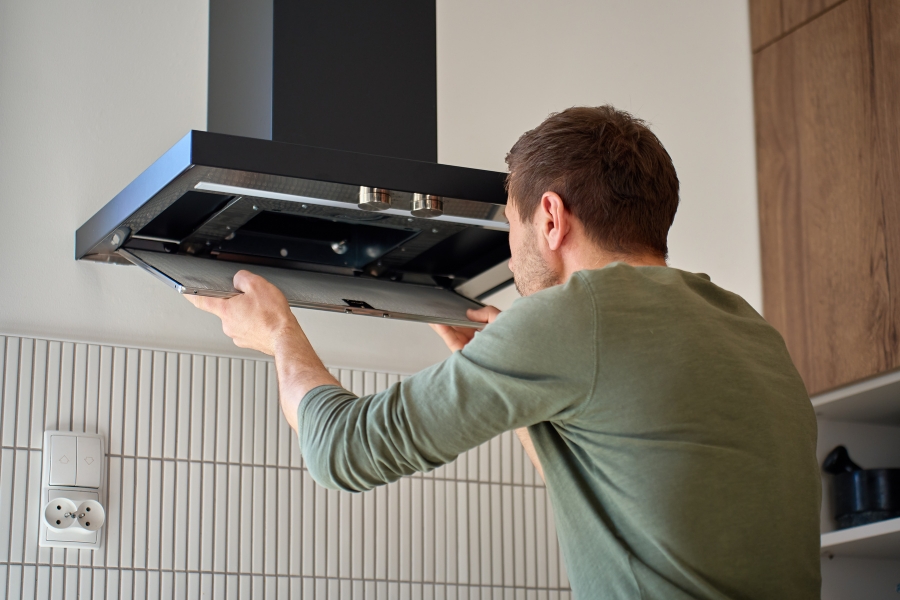
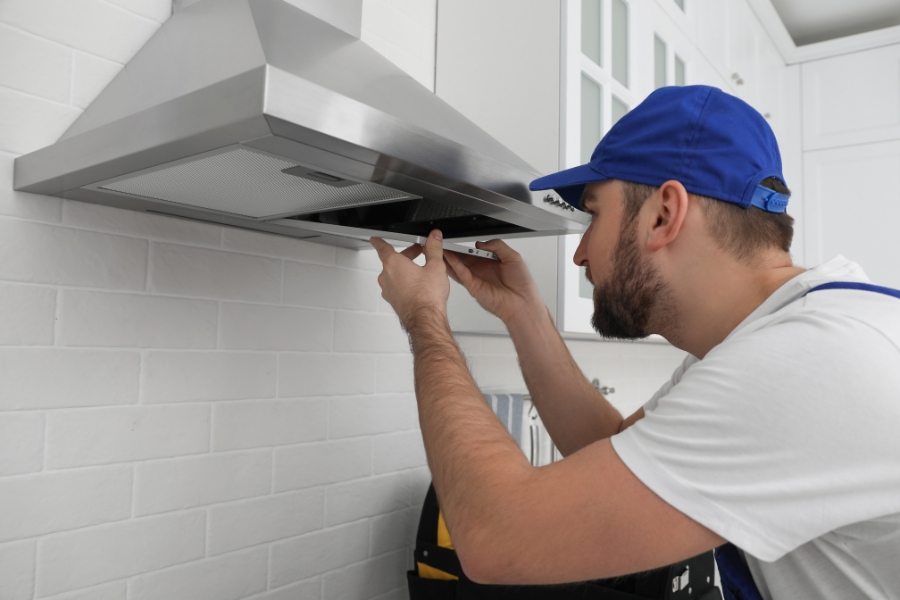
A kitchen hood, exhaust hood, or range hood is a device containing a mechanical fan that hangs above the stove or cooktop in the kitchen. It removes airborne grease, combustion products, fumes, smoke, heat, and steam from the air by evacuation of the air and filtration.[1] In commercial kitchens exhaust hoods are often used in combination with fire suppression devices so that fumes from a grease fire are properly vented and the fire is put out quickly. Commercial vent hoods may also be combined with a fresh air fan that draws in exterior air, circulating it with the cooking fumes, which is then drawn out by the hood.
In most exhaust hoods, a filtration system removes grease (the grease trap) and other particles. Although many vent hoods exhaust air to the outside, some recirculate the air to the kitchen. In a recirculating system, filters may be used to remove odors in addition to the grease.
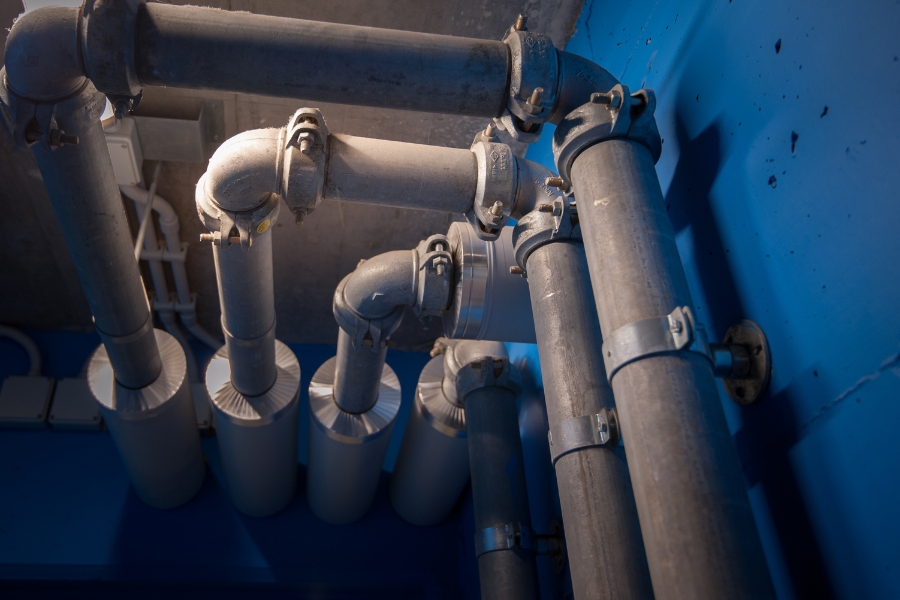
A water supply system is a system for the collection, transmission, treatment, storage and distribution of water from source to consumers, for example, homes, commercial establishments, industry, irrigation facilities and public agencies for water—related activities (fire—fighting, street flushing and so forth).
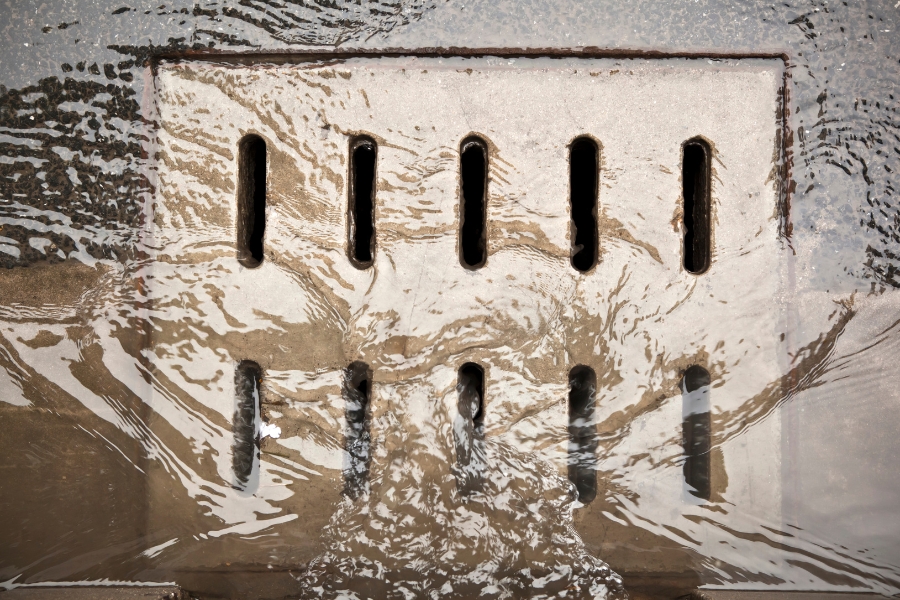
A drainage system is an arrangement to move liquids away from where they are not required for disposal in appropriate locations. A ‘drainage system’ can include anything from gutters and drains in houses to remove rain water, storm water systems to drain rainwater from roads into roadside drains and drainage systems to remove sewage from houses into municipal ‘sewers’ for disposal. Within the medical industry, ‘drainage systems’ can mean methods to drain unwanted fluids from the body, such as pus from wounds, colostomy bags to remove body wastes and fluids from internal abscesses and ulcers. Within engineering it can mean systems for removing spent oil, coolant liquids and by-products from industry referred to as ‘industrial waste.
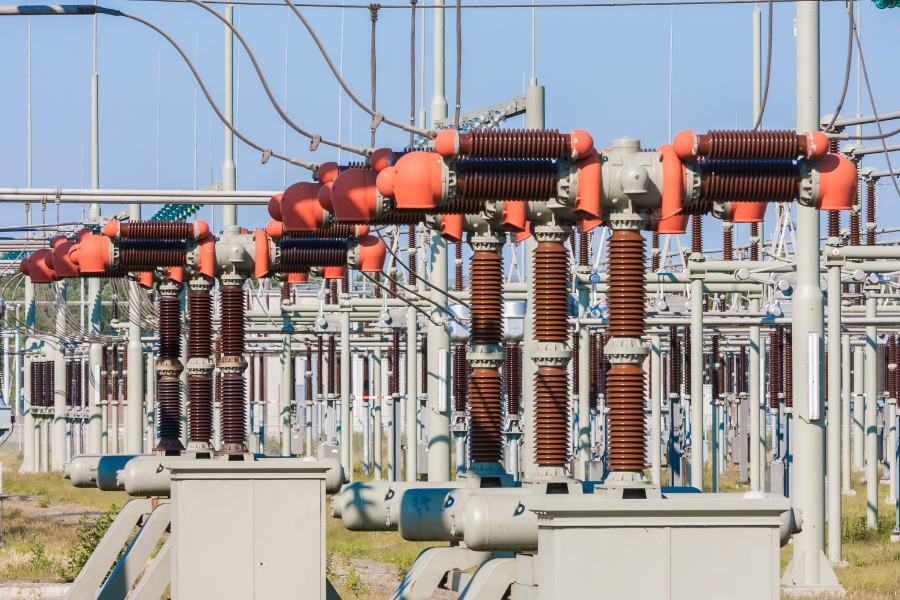
An electric power system is a network of electrical components deployed to supply, transfer, and use electric power. An example of an electric power system is the grid that provides power to an extended area. An electrical grid power system can be broadly divided into the generators that supply the power, the transmission system that carries the power from the generating centres to the load centres, and the distribution system that feeds the power to nearby homes and industries. Smaller power systems are also found in industry, hospitals, commercial buildings and homes. The majority of these systems rely upon three-phase AC power—the standard for large-scale power transmission and distribution across the modern world. Specialised power systems that do not always rely upon three-phase AC power are found in aircraft, electric rail systems, ocean liners and automobiles.